

The iMac G3 Should've Been a Blind Box
A quick lesson about demand forecasting.
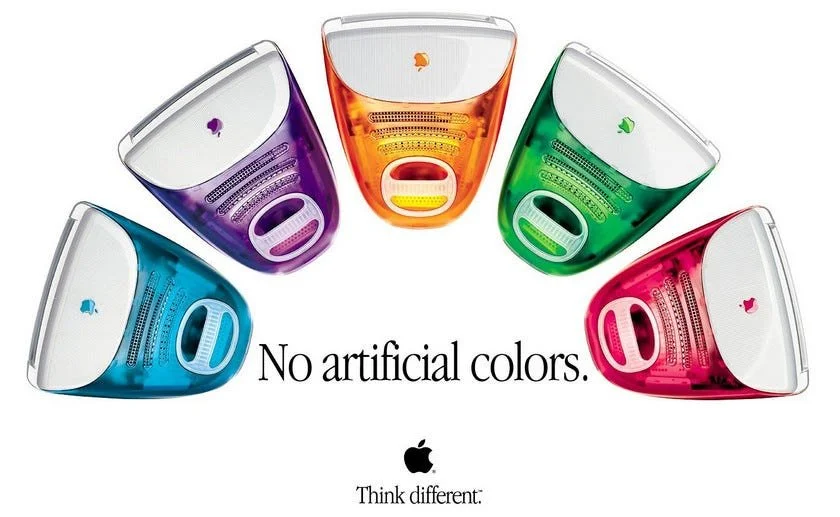
Blueberry. Grape. Tangerine. Lime. Strawberry.
⏰ Thu, Dec 11, 2025 @ 5 PM PST
🐟 Published from Seattle, USA
🔨 Built by Chase Burns Broderick
It’s been an accident, but every one of my recent stories is very, very pink. Or magenta, as T-Mobile would say.
Today, some colors that aren’t pink. Instead:
Blueberry
Grape
Tangerine
Lime
Strawberry (hey, a strawberry is RED)
Those were the five iMac G3 colors launched shortly after the computer’s debut color, “Bondi Blue.”
The iMac G3 is often credited with turning around Apple’s fortunes in the late ‘90s, reviving Steve Jobs’ public image and steering the company away from bankruptcy. The design was the computer’s big selling point, but it was also its doom.
LG, a South Korean manufacturer, saved Apple’s ass by executing the unprecedented manufacturing required to build the computer—the plastic kept catching on fire, among other problems. But when attempting to scale up to meet demand, LG struggled to onboard factories in Wales and Mexicali.
In Wales, the apprentice engineers sent to Singapore to learn from Apple’s factory didn’t account for Singapore’s very different weather, and equipment ended up getting wet back in the UK. In Mexico, cultural differences between the Koreans at LG, Americans at Apple, and Mexicans at LG’s factory in Mexicali ultimately undid the partnership.
But there was another problem as well: demand forecasting.
Tangerine, the warm orange iMac G3, turned out to be a bust. No one wanted it. Apple couldn’t predict which color would be a hit, and the manufacturing process suffered as a result.
Learning this history today reminded me of one of the benefits of blind boxes. When people want a specific color, they buy three, sometimes six, sometimes more of a blind box series until they get the exact one they want. This color chaos also fuels resale sites, as customers flock to resellers to buy the color they want, which, in turn, helps evolve blind boxes into luxury products.
Obviously, Apple didn’t sell iMac G3s as blind boxes—you always knew which color you were buying—but knowing G3’s color story helps illustrate why blind boxes have captured so much consumer imagination today.
Another helpful thing about blind boxes: No returns. On Temu, for instance, a site plagued by return issues, blind boxes can’t be returned. Why? Because once the product’s opened, that initial pop can’t be put back in the box.
Anyhoo, I’m reading Apple in China (2025), which is a history of Apple’s manufacturing relationship with China (and subsequent “capture,” as author Patrick McGee frames it). I’m not starting a book club or anything, but the passage I’m referencing is from the “Mexicali Blues” section on page 73.
That section ends with an honest joke:
Another Apple project manager says meetings with LG management in Mexicali were often tense, and executives could be rude. “I was leading one meeting where I had to call out LG for not meeting a contractual agreement or failing to supply units,” this person says. “The LG executive was dismissive and instead asked to tell a joke. “What do you call a person who speaks two languages?” he asked. “I answered, ‘Bilingual,’” the Apple manager says. “Then he replied, ‘What do you call a person who speaks one language?’” The Apple manager waited for the punch line. “An American.”
If you’re in Seattle, they have signed copies at Elliott Bay Book Company.
